

Virtual Slide
- Written By // Keith Damron
- Director // Mark Sobel
- Music // Danny Lux
Reviews
// Earth Prime
// Think of a Roulette Wheel
// External Reviews
Worlds Visited
Tribal World
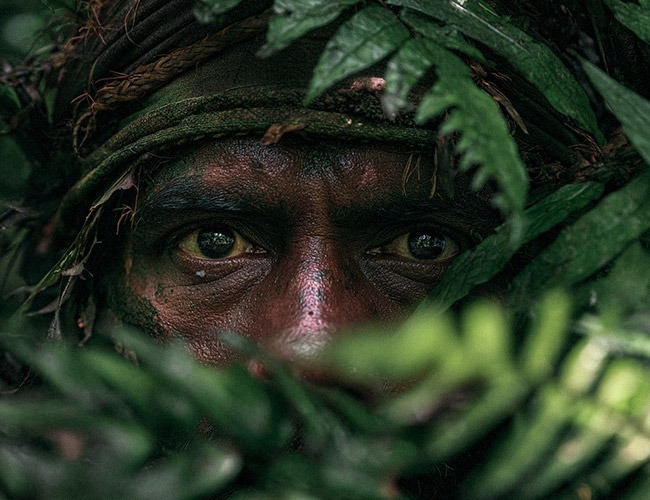
Don’t look too longingly at the native population, especially if they’re the chief’s daughter.

VR World
Video interactivity takes on a whole new term on this world, where the populace is subjugated by virtual reality headsets that control their lifestyle.

Hangover World
Rembrandt makes a mean hangover remedy.
Timer Status
Depends on what reality you’re looking at; initially, it’s believed that the timer is useless for the next 29 years, afterwards, it’s revealed that Randall Simmons has confiscated it.
Details
- The signs in the Earth HQ read:
- Unified Command Quarters
- Headquarters, Kromagg-Earth Operations, Unified Command
- West Wing, Operations 216-236
- The sliding initialization sequence is EAEBAE, a standard 12-bar bass riff.
- The guard watching Maggie in Simmons’ VR lab is named Robin Black.
- The VR machine Simmons gives the Sliders is called the Realman.
- VR Rembrandt’s manager is Stan, not Artie.
- VR Rembrandt is going to open Saturday night at the Hollywood Bowl with the artist formerly known as Elvis.
- The formula written on the blackboard in the lab is very similar to the original we saw in Quinn’s basement in the Pilot.
- The sign on the lab window reads:Vanderburen-Brockhurst
LABORATORY
Virtual Technology
For Better Living - The lab is open from 12 p.m. to 7 p.m.
- Rembrandt’s hangover remedy is called Cryin’ Man’s Patented Morning After Moose Juice.
Character Information
- According to Simmons, Maggie wants to fly in the Marines again.
- Maggie lived in an apartment with her husband before her world was blown up.
The following information is from Maggie’s VR fantasy and is thus not 100% confirmable:
- Rembrandt and his mother haven’t spoken in years.
- Quinn has always felt that there was something more to his relationship with Maggie than just friendship, and he thought she knew that.
Notable Quotes
- “Q-Ball, the girl was looking at you like a rare veal chop.”—Rembrandt. (maybe they re-visited Cannibal World from Fever?)
- “Do you feel you’re resistant to… pleasant thoughts?”—Simmons, to Maggie.
- “Man, I don’t even wanna know what he thinks he’s doing.”—Rembrandt, to Quinn, wondering just what that road crew is doing by sticking that huge tube in the manhole.
- “I was just taking a little dictation.”—LaToya, who was doing anything but.
- “My Steven is gone. My world is gone. Some things just go away, Rembrandt.”—Maggie.
- “Welcome to the Brown-Mallory Arms.”—Rembrandt, after Maggie enters their rathole hideaway.
Money Matters
- With the timer on the fritz, Quinn comments that it would be faster for them to wait 29.7 years than try to buy the equipment needed to design another sliding machine.
- In the real world, Quinn and Rembrandt have enough money to buy a laptop computer and a change of clothing for all three of them. It’s unknown whether or not they stole this or bought it outright.
Nitpicks and Errors
- How convenient that Quinn, Maggie and Rembrandt all manage to be wearing safari outfits before sliding into a tropical world with restless natives.
- If the timer is useless for 29.7 years, why is it counting up from 29? It should be counting down.
- I mentioned earlier that Rembrandt’s manager’s name in his VR fantasy is Stan. How difficult is it to look up his manager’s name from the previous seasons? Granted, it was Maggie’s fantasy, but that’s no excuse.
- Where did Quinn and Rembrandt get the money for the clothes and computer they purchased? The area they slid into didn’t exactly look like they could use the five-fingered discount, either.
- Does Maggie really think that shooting some bullet holes into the chalkboard is going to destroy the sliding equation?
- VR has taken over the world. So where do you conduct the most important research they you have? In a tiny, ramshackle lab in a rundown part of the city, of course.
- The male janitor inside the lab must have a twin brother, because he’s in an exterior shot walking around as a mindless drone.
Neatpicks
- Continuity watch: It was a rare thing in season three, but now the writers are making a concerted effort to talk about previous events. Rembrandt acknowledges that they missed the window of opportunity on Egypt World, and Quinn says that they found another timer on that world.
- Maggie’s world had a band called a Rolling Who, an amalgam of our world’s popular bands The Rolling Stones and The Who. The Rolling Who on Maggie’s world had a rock opera called “Angie,” the name of one of the Stones’ most popular songs. It’s also interesting to note that former Who member Roger Daltrey played Colonel Angus Rickman in the third season.
Rewind That!
Simmons calls the recovery ward part of Chandler Federal Hospital, which should have tipped Maggie off that her recovery was a little less than real.
Parallel History
From the Inside Slide:
Of the many technical marvels spawned by America’s technological revolution in the nineteen-sixties, none has had a greater impact than that of VIRTUAL REALITY. And what an impact it was. We here at the Sonmaha Corporation could never have anticipated just what our VR and all its innovations would mean to the world and, of course, the world order.
Sonmaha first delved into the world of VR when our government was seeking a more cost effective way to train its military jet and helicopter pilots. With the price of advanced aircraft on the rise and the bodies of trainees stacking up like cord wood, it soon became apparent that an alternative less lethal way of preparing our airborne forces was needed. The flight simulators of the time were ineffective, cumbersome and less than realistic. Something new and innovative was needed. Hence, the concept and base technology for the RealMan was born. Virtual flight simulators revolutionized combat fighter training. The early RealMan devices, though bulky and primitive by today’s standards, paved the way to new and exciting virtual worlds in its many forms and spin-offs.
The decade that followed saw numerous innovations for RealMan technology. As the headsets got smaller, the scope of its applications became broader. Soon VR was being used in medicine, industrial robotics and, of course, recreation. The crowning achievement of its use was in the first virtual mission to Mars. It was then that we at Sonmaha realized that the sky was truly the limit.
But it was not until the stock market crashed in 1980 that Sonmaha realized its true worth to the people of the world. With the onset of the second great depression our founder Steven Gates envisioned a mission for our company. In much the same way the motion picture industry provided a means of escaping our day to day woes in the thirties, Sonmaha was ready to meet the challenge of providing that same service in the eighties.
To answer Mr. Gates’ call to arms, the price of the RealMan was drastically reduced. Vast new escapist programs were created and marketed at considerable discounts. When sales still went through the roof despite the near at cost prices, it became apparent that Sonmaha was on the right track. But we needed to do more. We turned to the Federal Government. A historic merger was proposed and quickly ratified. Sonmaha became an arm of the Executive Branch.
Soon new programs were put into effect. Free RealMan devices and programs were distributed to the disadvantaged. The nation’s schools were hard-wired into a central educational mainframe. Soon labor unions, medical professionals and the entertainment industry were persuaded to come on board. Everyone was doing their part for national recovery. But as the depression spread to the rest of the world we realized we needed to do more. Sonmaha and the U.S. merged with the United Nations. We began to disseminate our VR technology on a global level. The rest is history.
The past five years has seen a number of new innovations introduced to by Sonmaha. Among those are the completion of the world mainframe run from our own corporate headquarters. Newer more realistic programs designed to cloak even the most grueling and laborious tasks are seeing wide use. We have even been able to increase the levels of the pleasure stimulating sub-routines, leading to a more enhanced experience and fewer incidents of user rejection. As the depression continues into its eighteenth year the Sonmaha Corporation will continue to strive to maintain the excellence that have forged this new world order.
Guest Starring
- John D’Aquino as Randall Simmons
- Conchita Leeflang as Secretary
- Bill French as Technician
- Brett Wagner as Guard
- Sibel Ergener as Duvall
Script Archive
Click on the links below to download rare scripts, outlines, and memos associated with this episode.
October 2, 1997
Production Draft
October 7, 1997
1st Pink Revisions
October 9, 1997
1st Blue Revisions
October 15, 1997
1st Yellow Revisions
October 16, 1997
1st Green Revisions
October 17, 1997
2nd White Revisions
October 20, 1997
2nd Pink Revisions
Related Articles
Kari on Sliding
Cult Times #34