


Television characters evolve over time; it’s a natural progression of network demands, actors growing into their roles, and shifting writer’s rooms moving the story in new and uncharted directions.
But those characters often change before they make it to screen, too. Over the course of developing a series, fresh ideas and inspirations can cause a role to change gender, job, or station in life. Sliders is no exception; show aficionados may be aware that early drafts of the pilot had Quinn living in a boarding house, or that he was obsessed with his beautiful neighbor Stephanie. But did you know that he loves chocolate—of any kind? Or that, contrary to what we saw in Eggheads, Professor Arturo was in the process of his third divorce?
The series pitch for Sliders has character outlines for each Slider, and while they largely resonate with what we saw on screen, there are some wild changes, too. There’s also some interesting foreshadowing laid down that isn’t explored until much later in the series run; one of Quinn’s conversations with Heather Hanley in The Guardian definitely draws inspiration from the following.
Earth Prime is pleased to reproduce these outlines below; enjoy these early iterations of our sliding team.
Quinn Mallory
An only child, Quinn lives with his widowed mother on a hilly street in San Francisco. They have a good relationship.
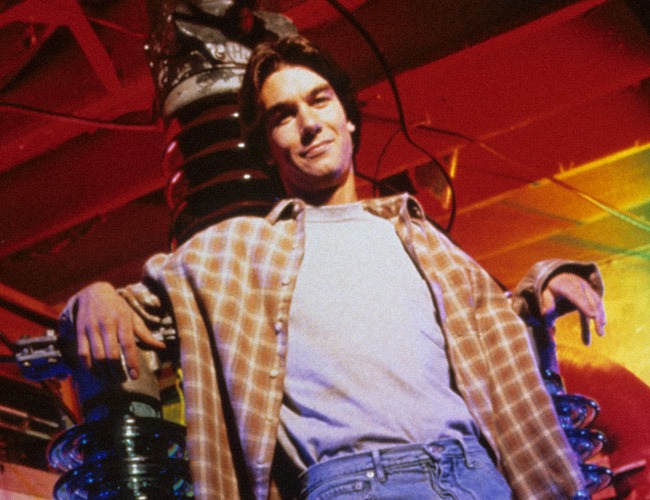
From very early on, Mike and Loraine Mallory realized they had a very special child on their hands. Amazingly curious about the world from near infancy, Quinn grew up happy and well adjusted.
More at home in center field or taking snaps from center, Quinn has always downplayed his genius, feeling it tended to separate him from his peers.
His intense interest in physical science and the mysteries of the universe, became something of a closet hobby, relegated to a secretive corner of the library or the basement he turned into a lab. He's always been conscious of not being considered a nerd—thus his brainy side was something of a boyhood albatross.
Quinn's basement is his sanctuary—a place where he can allow his brilliant, flowing, sometimes scattered genius to flourish without restriction.
Possessing a likable nature, dry sense of humor and affinity for 60's and 70's music, the 25-year-old Quinn is more at ease with his gift now—but he'd still prefer to blend in with a crowd than be pointed out in one.
The most perplexing mysteries of all to Quinn center around females. Quinn is fully capable of obsessing over a girl—putting her on a pedestal—yearning for her with every inch of his heart. He has difficulty expressing his feelings in this area—and even more difficulty in maintaining any objectivity on the matter.
Quinn's loves are Einstein, Hawkings, The Beatles, Neil Young, the Oakland A's, the 49ers, the San Jose Sharks, technical manuals, the space program, cryptozoology, and chocolate of any kind.
Wade Welles
Wade met Quinn in the computer store where they work and developed a pretty serious crush on the boy. She is often secretly irked at how oblivious he is to her desires.
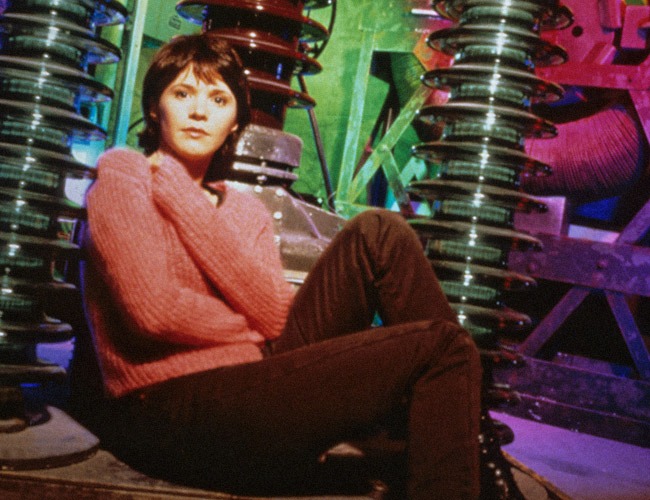
Wade grew up tight with her older sister Kelly (2 years her senior). The daughters of a hippie turned yuppie couple. Her parents initial instincts are closer to Wade's heart—she is into the environment, animal rights, folk music, ending apartheid, etc.
Wade was a tomboy and maintains a feisty side; she enjoys competing but at the age of 23, struggles with self doubt and self-image. Disdainful of make-up and trendy clothes, she's convinced that she's funny looking and can't understand why so many people tell her how pretty she is.
Wade dropped out of college after two years (after a memorable incident at her sorority where she told all the other girls what bitches they really were) and, in truth, has no idea what she wants to do with her life. She is, however, entirely capable of living day to day—ready at a moment's notice to appreciate any new and exciting opportunity that comes along.
Wade's loves are Gilligan's Island reruns (she identifies big time with MaryAnn), The Cranberries, Tracy Chapman, the ocean, nature, The Simpsons, Monty Python, Woody Allen movies, Ann Rice novels, conspiracy theories, and like Quinn, chocolate.
Rembrandt Brown
Rembrandt Lee Brown was born in rural Alabama—part of a large family. He grew up singing gospel and cut his first record in Lubbock Texas at the tender age of fourteen.

At seventeen, the regional band Little Rembrandt And The Marvels had a minor hit with the tune "Explosion of Love". Two years later, his new group Rembrandt And The Brown Derby's scored with "Love Explosion”—a song that critics claimed was a shameful rehash of his other hit.
Stung by the criticism, a wounded Rembrandt broke up the band and went solo without success. By now however, the word had gotten around about the emotional (some would say temperamental) young singer who cried real tears at virtually every performance.
A memorable incident occurred at "Junior's Clam House," a dive in Shreveport where Rembrandt was doing a three-night gig. Legend says Rembrandt spent so much time crying on stage, he emptied the half-empty house with great regularity. Rembrandt was fired, but a local scribe labeled him The Crying Man in print, and the name stuck.
Rembrandt eventually quit show-biz, vowing never to return, but six months later became the lead singer of The Spinning Topps, and the rest was history.
Climbing the charts with classic hits like "Cry Like A Man", "Slap Me, Love Me", "Saving My Tears In A Jar", "Tear Explosion" and "Explosion of Tears", The Spinning Topps hit the big-time.
But Rembrandt was still stung by the critics, who said his songs were derivative and his melancholy antics cloying. Soon, there was acrimony inside The Topps to deal with as well. Back up singer Brick Lane wanted to sing lead once in a while—and back-up singer Chubby Bellingham demanded the right to cry real tears as well. To Rembrandt, this was the last straw.
Recoiling from this artistic mutiny in a well publicized and acrimonious split-up, The Crying Man walked out on The Topps. Stung by being called "an emotional sissy" in the press by old friend Brick Lane, Rembrandt vowed to be "Bigger and Better than ever!" without the Topps:
Unfortunately, it didn't work out that way. The Topps hired a new lead, and went on to greater glory. Rembrandt's career spiraled down… down… down…
Now, after years playing lounges, bar-mitzvahs, etc.—and in spite of four officially announced retirements—The Crying Man is back.
Sort of.
Maximilian Arturo
A true genius in his own right, Professor Arturo has led a life both dynamic and sadly unfulfilled.

The 48-year-old physics professor is struggling with his personal life at the time of his first Slide. His third wife has filed for divorce, and the proceedings are messy. Arturo has three grown children from previous marriages, and sadly, he's never been able to achieve real closeness with any of them.
Arturo possesses a personality as volatile as a split atom. On the surface he is bombastic, pompous, melodramatic and cynical—underneath, he is soft-hearted and sensitive, easily susceptible to great outpourings of emotion.
When Arturo goes to the theater, he is perfectly capable of telling "some idiot" making noise to please shut his "gaping trap"—and also likely to weep at the end of the film if the hero takes a fall or is forced to walk away with a broken heart.
Macho to the core, Arturo shields his sensitive side from the world—he's far more comfortable telling someone off with scathingly understated sarcasm than he is letting them see his tender side.
Arturo's career is the centerpiece of his bittersweet existence. Although his raw genius has elevated him to a certain cult status in the scientific community, he finds himself teaching at middle age, while less talented contemporaries are earning five times his salary in the nearby Silicon Valley.
Many of Arturo's theories on physical laws, interdimensionality, and hyperspace are somewhat revolutionary in nature and have drawn subtle scorn from conservative peers. Arturo bears the pain of rejection—it is an important part of the mix in his complex personality.