

My redemptive readings are getting me in trouble.
I’m not going to apologize for this—I have to find something to enjoy in this show. Otherwise how could I continues with this project that’d make Sisyphus blush?
Here’s the crux of the trouble: the fact that the characters don’t react enough to the horrors at hand is diminishing to the show. This isn’t something I necessarily disagree with. (Jerry O’Connell as) Quinn hasn’t shed a tear for his fallen Earth. But, speaking in-universe, he did just get a ‘new’ homeworld. He also just found out he has a brother. That’s a lot to take in. I personally thought that Quinn’s little “I have a brother!” moment in “Prophets & Loss” was super touching. I can understand why a guy would choose to focus on something like that—family—than to embrace the terror of real life.
Plus, Quinn Mallory hasn’t really been too emotive of a guy in years. When was the last time we saw him really freak out at something? When Rembrandt punched him in “The Exodus?” Yeah, I’d probably keep my feelings to myself too if that’s what was going to happen. Look, I know Jerry O’Connell is mentally showing up less and less as the show goes on. But as much as we might prefer his performance in Seasons 1 & 2, we can’t just decide that the character he portrays isn’t Quinn Mallory anymore. That’s not up to us.
Jerry is playing the character with more and more reservation, whether or not be intends to. So it’s up to us to reconcile that with the Q-Ball we used to know. It’s not hard to, really. Quinn’s seen a lot. And it’s not that happy. Half his friends are dead. So many people have died, in his eyes, because of him. He finally fulfilled his promise to his friends, only to have Home burnt to ash. To Quinn Mallory, that’s his fault. The man is nothing but guilt. The guilt of billions. It isn’t hard to imagine him bottling up his every emotion and changin his face to a nothing-grimace of emptiness.
Now, speaking out-of-universe/IRL, we now Jerry O’Connell is just bored. But it’s up to us to forget that. It’s up to us not to even know that. If the Internet era has changed anything, it’s changed the idea of “behind the scenes.” The idea is irrelevant. Spoilers are almost impossible to avoid. Characters’ fates are decided by contracts, and we are now unavoidably aware of this.
So I truly believe it’s our job as fans to be gracious to our show. We have to accept what our show’s become. We don’t have to love it by any means. Plus, if we actually spent a lot of time watching Quinn & Rembrandt weeping through the vortex, would that really serve the show?
Plus, the arguments of emotionlessness aren’t exactly true—at least not yet. Rembrandt is showing emotion. And Quinn is worried about him. And I’m sorry, y’all, but Quinn speaks out loud about finding Wade. And saving Earth Prime. (He does suggest that they put off that particular mission, but only because of the dynamics of sliding.) I was stunned when I heard him say all that. The season’s reputation is so overpowering it’s tainting my expectations. This hour is a character hour, and it’s full of the kinds of moments that apparently never happen on this show anymore.
I can understand the dilemma. The Sliders aren’t superheroes. The Kromagg Dynasty is a deadly military force. Their power is absolute. The best part of “Invasion” was that they don’t, in any way, defeat the Kromaggs. They escape because they were meant to. This season’s overarching goal of locating an anti-Magg weapon makes sense because they really do need more than just themselves to defeat this force of nature.
But the Kromaggs also need to seem at least remotely capable of defeat for our characters not to give in to despair. But it’s also for us to maintain belief in the story. “Invasion” also got a lot of its mileage from the Kromaggs being unknowable. “Common Ground” gets flack for humanizing the Kromaggs, but the fact of the matter is that the ‘Maggs were cratered as soon as we saw them speak in “Genesis.”

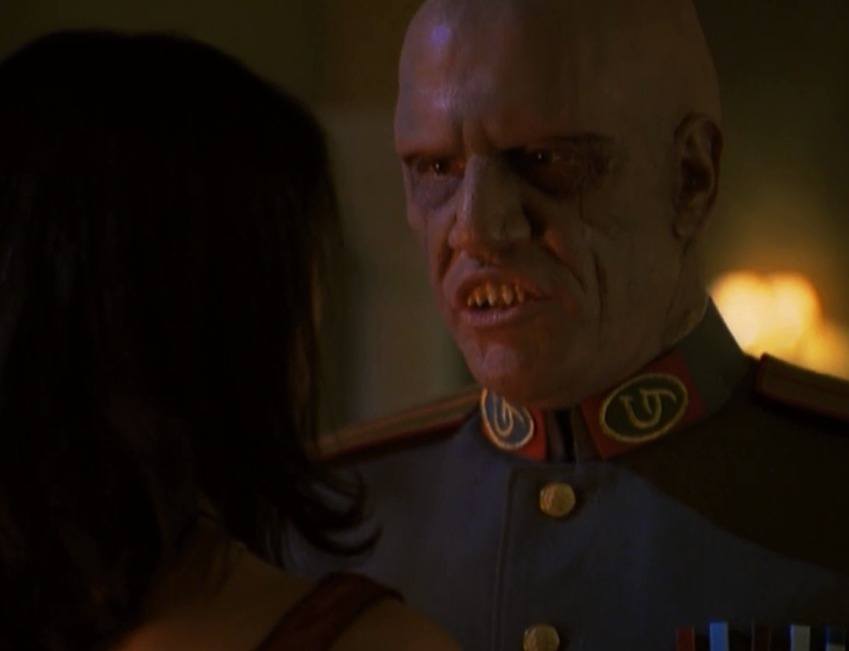
Of course, Season Four’s slashed budget doesn’t help this ‘race’ either. I’m sure it’s very hard for an actor to take himself seriously when he looks in the mirror and sees a goofy pig-ape dude staring back at him. He looks like a joke—it’s a safe bet he’ll act like a joke. So here we meet the first of oh so many brain dead Subcommanders, chipping away the viability of the Kromagg Dynasty as an enemy, one stilted delivery at a time. But while Krolak is awful, Kromanus, or more accurately, Stephen Macht, is very much not (this dude was almost cast as Captain Picard, so I think y’all better recognize).
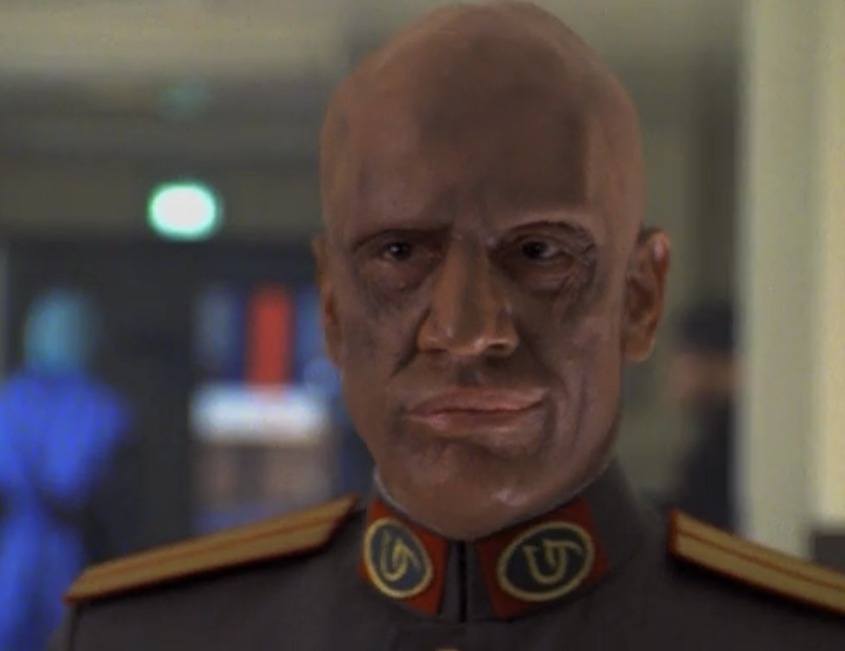
The writers want to try something out. They want to see how much of the hour they can hang on the ‘new’ enemy. In order to do this, though, you need to have a clean slate of a character. And so while it might seem like not much time has passed before the Kromaggs got a soul, that’s really only if you’re seeing them through a fresh pair of eyes: in this case, Maggie’s.
Sure, Maggie’s seen the ‘Maggs. She’s seen what they’re capable of. She’s heard what Quinn & Rembrandt have told her. But she’s never met them, not really. Sure, they killed Marta, but they were breaking out of jail at the time, with gunfire coming from human sympathizers as well as Kromaggs. Maggie’s the only character who doesn’t really have any preconceived notions about the Kromaggs.
Plus, it’s not like we’re being asked to forgive the entire Kromagg Dynasty of its sins. We’re being asked to relate to one Kromagg. That’s fine. If there’s any sin the episode really commits, it’s that it comes too early in the run. It can’t come too much later—the ‘Maggs still have to be fresh in Maggie’s thoughts, and still sort of unknowable. Having this episode run third opens up something that could end up being a problem for the show.
The reason Star Trek‘s Borg stopped being terrifying wasn’t because the writers gave them a soul—it was because by the time we got to the end of Star Trek: Voyager, we’d seen them so fucking much. Seeing a Cube (or a Sphere, or a Queen, or a Transwarp Network or Whatever) stopped meaning “oh, shit.” It started meaning “not again.” Having the Kromaggs show up so soon collapses the Multiverse in on itself. I understand, from a story perspective, the fact that we have to keep up with our new enemies, in order to give them any sort of power. But only having one episode pass between Magg-Centric Episodes only serves to make it seem like there’s divine interference going on (which y’know, there just might be).
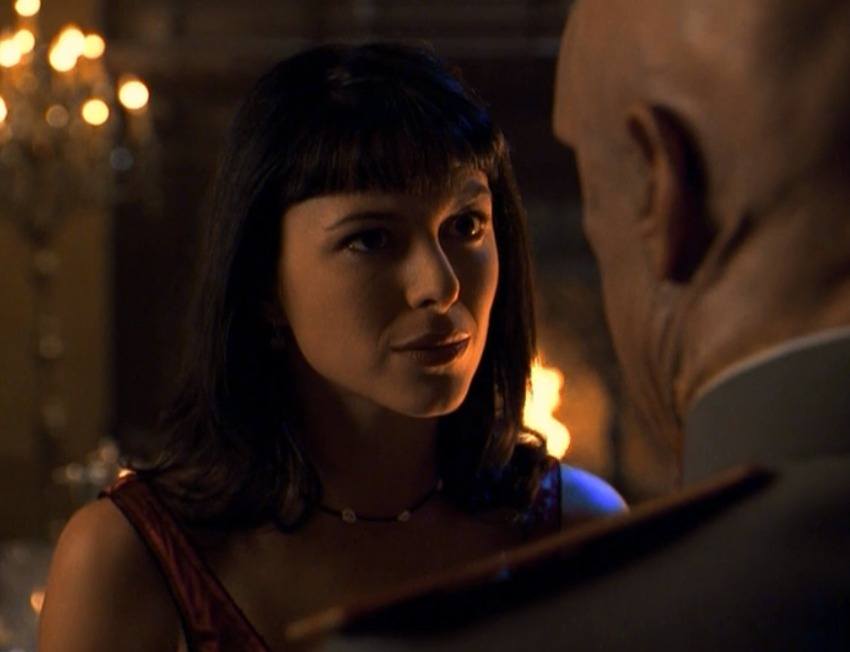
But let’s step away from that (it’s a problem that hasn’t happened yet, and has no place in this review). There’s something pretty amazing going on that doesn’t really draw attention to itself: the fact that the show uses Maggie as its emotional center. Maggie, who when we met her, was a soulless nearly-evil woman who thought nothing of the emotional torment she caused to those around her. The fact that the word ‘sympathy’ can be used in the same room as this character now is a true testament to the writers, and to Kari Wurher.
Which isn’t exactly to say that she can carry a scene entirely. She’s helped immensely by being in the same room as Stephen Macht—she has no choice but to step it up a notch. But Kari still has trouble with enunciation, with getting her lines out in a natural way. But she’s softened her approach to playing Maggie in a much-needed way, and she does so while still maintaining a consistent character of “Maggie Beckett.” It’s all in the eyes, really. Kari Wurher might not be able to act with her mouth (and I don’t mean that in a “Season Three” kind of way), but she’s actually pretty adept at acting with her eyes. It’s small, and you have to be looking at them (which you know isn’t where the show wants you to look), but it helps invest in a character that before was absolutely un-investible.

The ostensible ‘theme’ of the hour is ‘the old warriors spar.’ Maggie & Kromanus spend a sizable chunk going back and forth about what it “means” to be a soldier, a true warrior. Despite Kari’s A for Effort this week, I’m never really going to buy Maggie as a credible soldier. But at least we get a mention of her husband? PHHHT. RIP STEVEN.
Anyways, this conversation is a feint. The real juxtaposition the episode wants us to make is between Kromanus and Rembrandt. They’ve both been ravaged by war, and they’re both crippled with regret. Sure, we’re happy of Kromanus’ regret (and we’re still not entirely sure what Rembrandt’s dirty secret is), but there’s still the fact that they’re going through the same emotions. War has hurt them. What we see in this episode is how they both deal with these feelings—how they adapt to the brutal change in their lives.
Kromanus, love it or hate it, is actually the figure of Hope in this episode. He abhors the revenge-fueled turn the War has taken. Sure, the outcome will be the same (decimation of humanity), but the road to that outcome is without honor. He’s seen what desperate people do: it’s what cost the Kromaggs their homeworld. (Which, actually, seems to be a shocking amount of foreshadowing as to the destructive properties of the Voraton Device [SPOILERZ.])
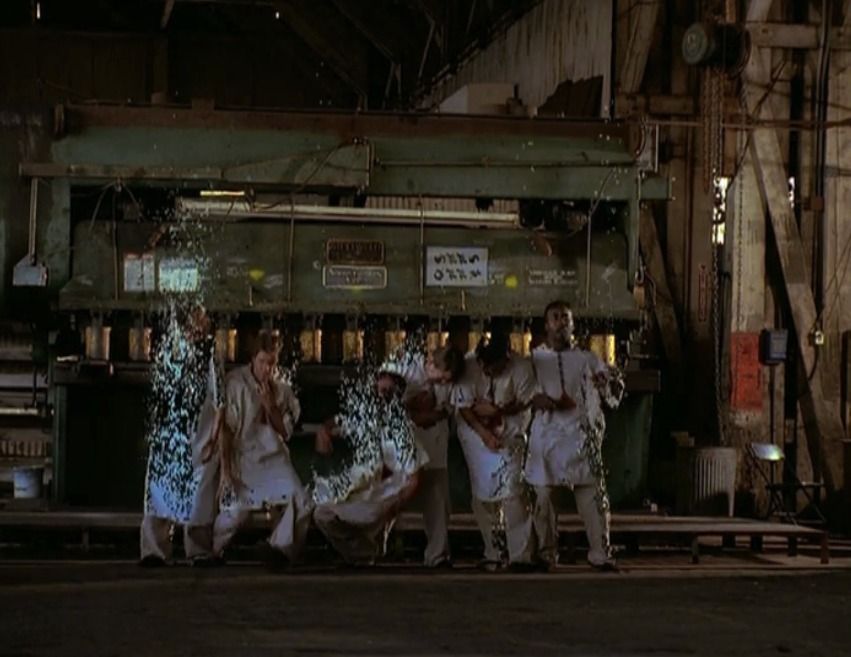
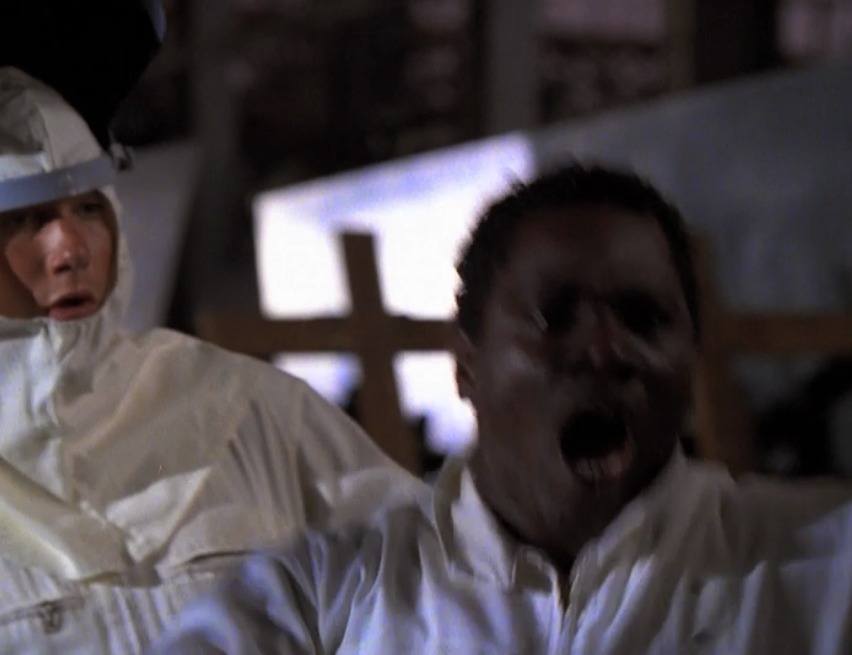
Rembrandt, on the other hand, is flying off the handle, yelling and shooting and making painfully obvious Nazi allegories. Sure, the experiments the ‘Maggs do in “the Pit” are horrifying, and Production made the right call in spending seemingly every cent of their budget on this dude’s horrifying makeup:
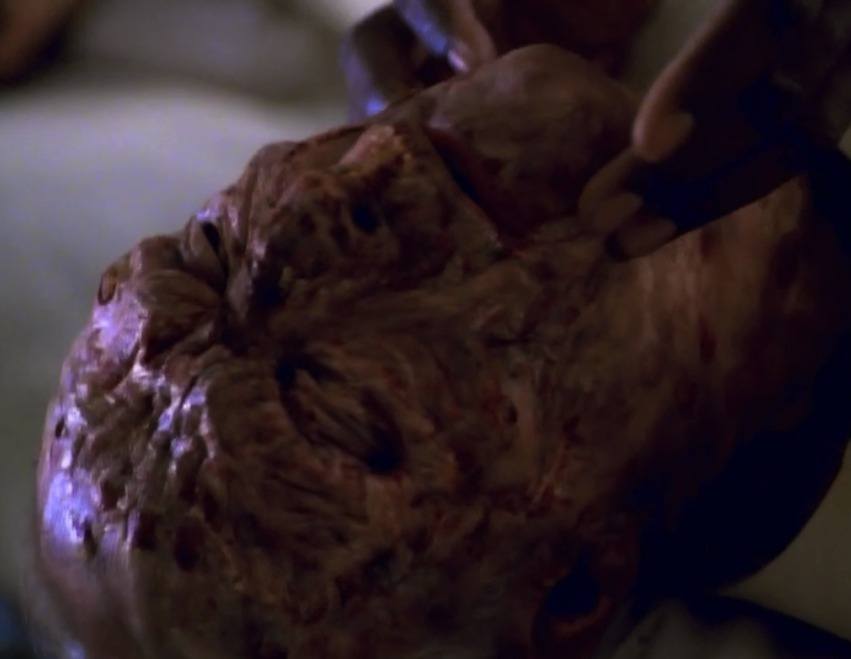
—but —Rembrandt puts the group in needless danger countless times. And even though he’s proved right (semi-unfortunately), he only finds out about the experiments because he snoops around, trying desperately to find a reason not to trust the Kromaggs. So when Kromanus pulls an about face, and shows mercy to the humans, committing suicide to right the wrongs of the Dynasty, Rembrandt is blind to this.

He’s blind because he sees Wade in every face he sees. He’s looking for reasons to hate the ‘Maggs when he stalks those corridors, but he’s also looking for Wade. So when he meets Penny, a test subject with pep and strength and youth and a great haircut, all he sees is Wade. So he fights hard to save her, threatening himself, threatening the group, and sure, kind of threatening Penny, too. He’s doing it out of revenge, but also out of shame. He left Wade behind, he says, and there is honest pain in his eyes. But that pain is guiding his mission so fiercely that he can’t see the consequences of his actions. He accuses Quinn of wanting to abandon Rembrandt’s Earth (to which Quinn beautifully replies “it was my Home, too”), and goes on rage-benders trying to avenge every person ever who ever lived.
It’s a complicated thing for the show to throw at us. But Kromanus’ “even a warrior tires of pointless bloodshed” line, while very silly, is actually quite deft in that it underscores a possible future for Rembrandt. But at this point, Rembrandt won’t hear it. He can’t see past his rage. His hatred for the Kromaggs isn’t going to get him anywhere. Or if it does, it will get him, and everyone else, killed.
This episode isn’t about Kromanus. It’s about Rembrandt.
Of course, it’s hard to actually see that without looking very, very hard. There’s subtlety in the script, but once it leaves the page it’s lost in an ugly miasma of overscored and overdirected nonsense. Every shot seems to last too long, like it’s waiting for a voiceover that will never come. It reminds me of that quote from Chapterhouse: Dune that I quoted in my review of “Slide Like an Egyptian”:
Intentional detail in everything although sometimes you had to dig for it. Budget dictated reduced quality in many choices, endurance preferred over luxury or eye appeal. Compromise, and like most compromise, satisfying no one.
In honesty, this is the only way to appreciate Sliders as it’s become. It isn’t a show for everyone. But below all the painfully dated decisions and lack of cohesion, there’s a wonderful show. It’s hours like “Common Ground” that underline this fact so completely. If you want to watch a show that actually has a lot to say about humanity and how we deal with extreme tragedy, then you can find all that in Sliders. But if you want to see emotionless schlock, that’s up to you too.
But I’m choosing the former. And I think you should, too.
Next Week: Rembrandt makes a really funny dick joke (Virtual Slide).