


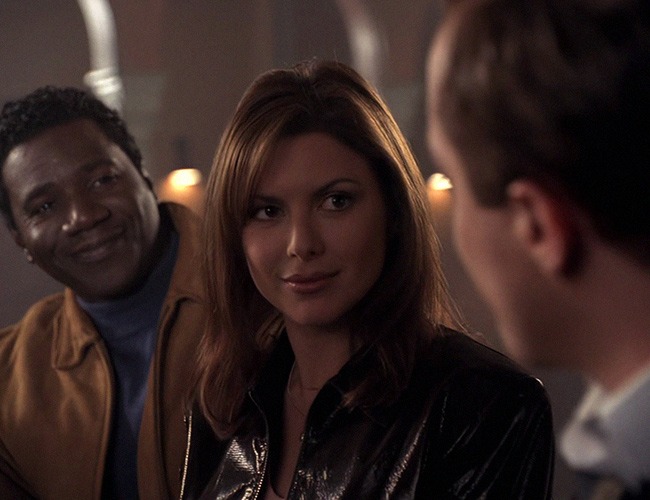
Partway through “Map of the Mind,” Rembrandt and Maggie chat up a neurologist who just happened to take a job at the same nearby mental health facility where Mallory and Diana are trapped against their will. As tourists of this world, they’ve discovered this United States has clamped down on all things creative, be it mind-expanding research or scavenged artwork. Rembrandt, the veteran Slider, is fully aware music has similarly been criminalized in this corporate dystopia.
Yet how does the Cryin’ Man respond when asked what he does for a living? “I’m a singer.”
While not as insulting to audiences as last week’s Requiem, “Map of the Mind” takes the prize for laziest and most frustrating outing of the season. And it’s not just because our main characters act like buffoons to generate tension; it’s because this episode once again demonstrates the production team’s almost perverse insistence on taking compelling ideas and executing them in the most half-assed way possible.
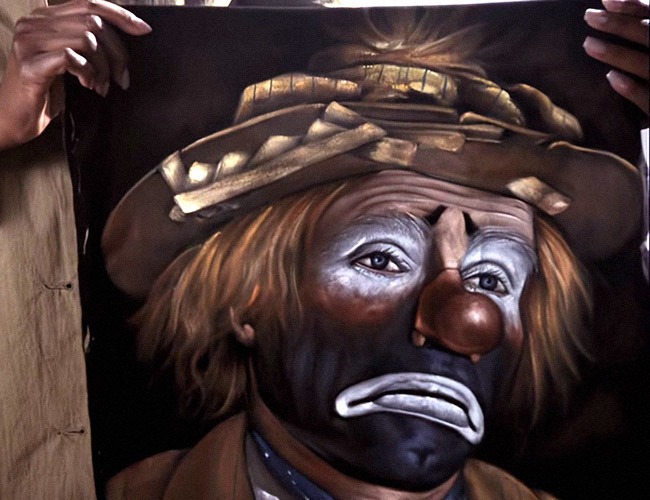
We have been presented a world where creativity is outlawed, where people are so desperate for some art in their lives they’ll steal black velvet paintings of clowns. One of your main characters is an artist and a lifelong musician—why not put him front and center? There hasn’t been an episode focusing on Rembrandt all season; why not let him shine for once?
Or, let’s try a different tack; we’ve been presented a world where technology has progressed to a point where the mind of an individual can be mapped and restructured with the press of a button. Last time I checked, we have a main character who is literally of two minds. Could the story revolve around Mallory directly confronting Quinn's consciousness in a way we haven't seen? The procedure doesn't even have to be forced—it could offer the Sliders a chance for some closure and for Mallory to come to peace with his bizarre situation.
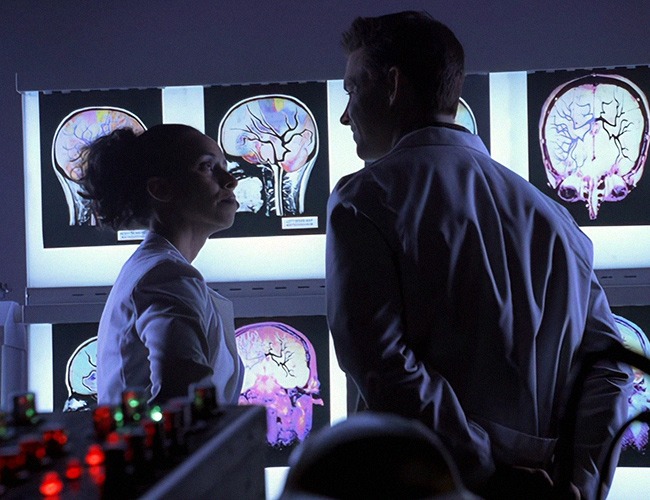
These aren’t complicated stories, but they are rooted in the characters and their situations. Maybe the producers thought The Java Jive fulfilled Cleavant's musical quota for the season; maybe they figured Mallory’s remark at the end of New Gods For Old put a pin on his seasonal arc. I don’t know. What I do know is that “Map of the Mind” had opportunities to tell a story situated in the Sliders universe and actively chose not to. As I said—frustrating and lazy.
But this isn’t a what-if column, so allow me to summarize and judge the episode on its own merits. In short, the Sliders land on the grounds of an asylum incarcerating creatives and are separated when the Riot Squad breaks up an otherwise peaceful gathering of inmates. Maggie and Rembrandt must try to find their way back in while Mallory pretends to be a doctor to protect Diana after she is remapped against her will.
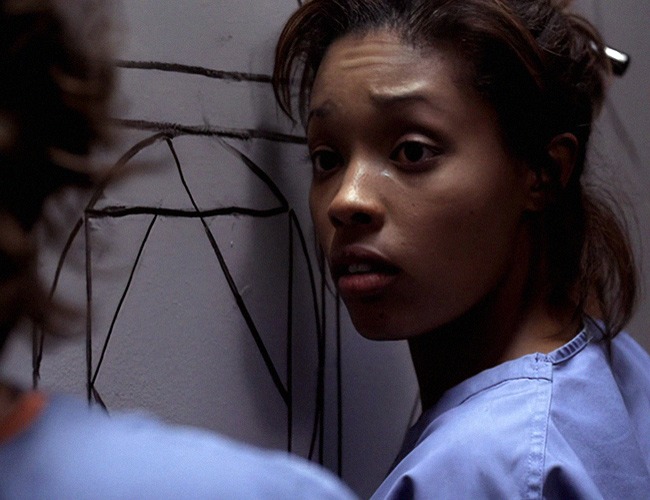
Said remapping has an unexpected wrinkle: since the hemispheres of the brain are reversed on this world, the procedure leaves Diana catatonic and connected to some superdimensional collective consciousness that also grants her telekinetic abilities. (Just roll with it.) It’s a race for all four to reunite, cure Diana, and slide before the authorities can lock them up and throw away the key.
It’s a strong outing for Mallory; his grace under pressure and use of social engineering allows him to seamlessly ingratiate himself with the head of the institute (Claudette Roche). He’s also able to befriend Jane (Michael McCraine)—another inmate with psychic skills similar to Diana—to learn more about remapping and ultimately identify how to reverse the process during a tense standoff. Take a bow, sir.
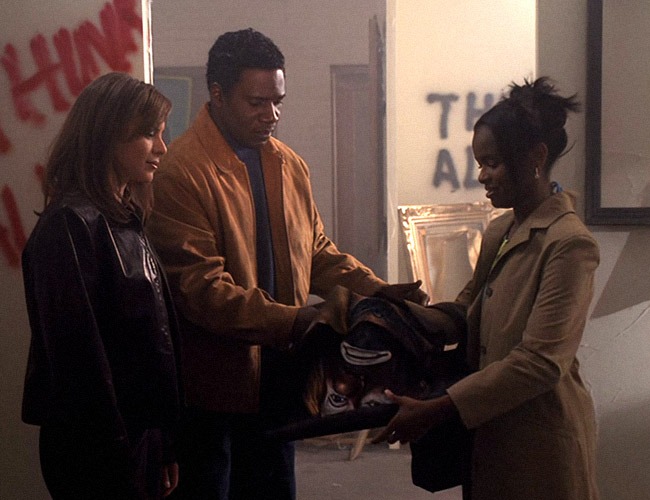
If only the others fared as well. After wandering into town, Rembrandt and Maggie break into a shuttered art gallery in broad daylight for no good reason. When Rembrandt mentions being a singer, Maggie tries to salvage this gaffe by claiming he’s a Singer sewing machine repairman. And their strategy to avoid suspicion? Anticipate the neurologist breaking into their room to abduct them so they can abduct him instead! (Maybe they do belong in the asylum—that plan is insane.)
What about Diana? Well, the remapping process robs her of speech, so much of this week’s runtime is dedicated to frantic pantomime. That said, Tembi Locke absolutely nails bug-eyed crazy. She makes a feast out of these scenes with her movements and the sheer intensity of the stare. Too bad it doesn’t add anything new to her character; after returning to normal, her big takeaway from being connected to a universal consciousness is that it doesn’t eat. You don’t say!
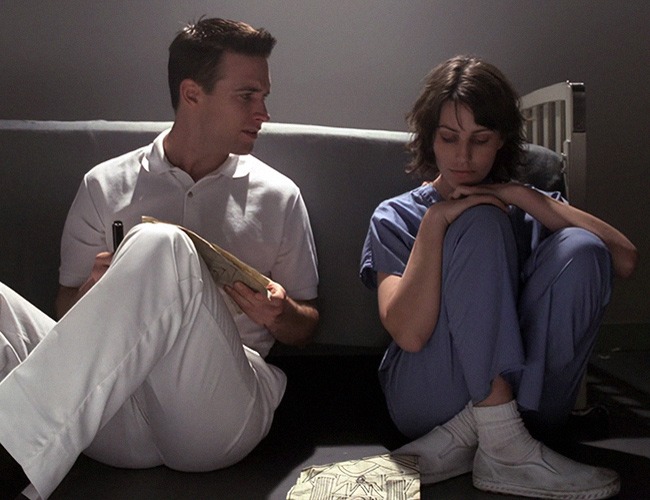
If it seems like I’m glossing over this interconnected mind, it’s because the episode does, too. Turns out remapping was intentionally developed as a way to tap into this consciousness, but the government seized the technology from Doctor Malcolm White (Paul Sand) and used it to lobotomize free thinkers. We learn this because White has conveniently committed himself to this facility. Oh, and Jane is his daughter. (Her exhibition of psychic powers is never explained.)
At the end, nothing new is learned about the consciousness Diana experienced, and no larger questions about the concept of a unified mind are asked. Diana just wakes up and goes to brunch.
“Map of the Mind” comes to us courtesy of Robert Masello, the freelancer who also pitched The Great Work to Sliders earlier this season. Thanks to the Year 5 Journal, we know how badly production served that episode when taking it to screen; I can only imagine how this story suffered.
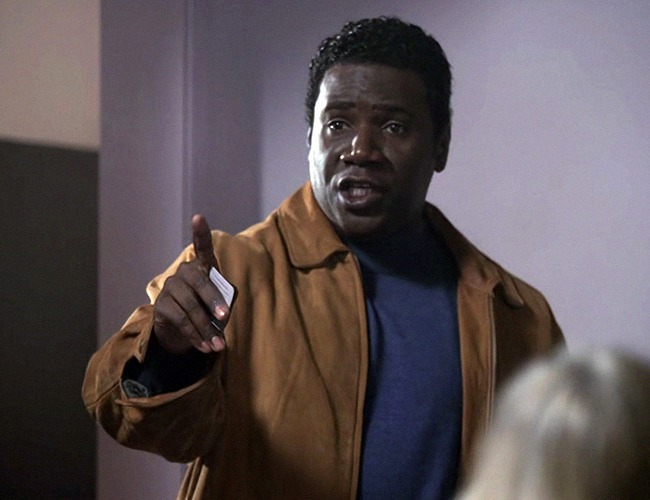
And that’s a shame, because the signs of caring are there—appropriately wonky score from Danny Lux, nice location shooting for the Oakwood Institute itself, and solid art direction reinforcing a drab and colorless world. Even some of Keith Damron’s punch-up work (he claims credit for Rembrandt’s firebrand speech) is fun and clever. There’s some unfortunate mockery of mentally ill people throughout (crazy people be crazy, right?), but it’s just par for the course for late 90s television.
We’ve seen production rise to the occasion with Applied Physics and The Return of Maggie Beckett. Why settle for foisting these low-stakes adventures on us? Why set the bar so low? This story basically turned Diana into a conduit for God; isn’t that worth spending a few minutes talking about, or at least linking it back to the similar adventure we saw in “New Gods for Old?”
Something tells me the Creativity Curtailment Police stood over them as they rewrote this script into oblivion.